Open standard · MIT
The aDNA Network
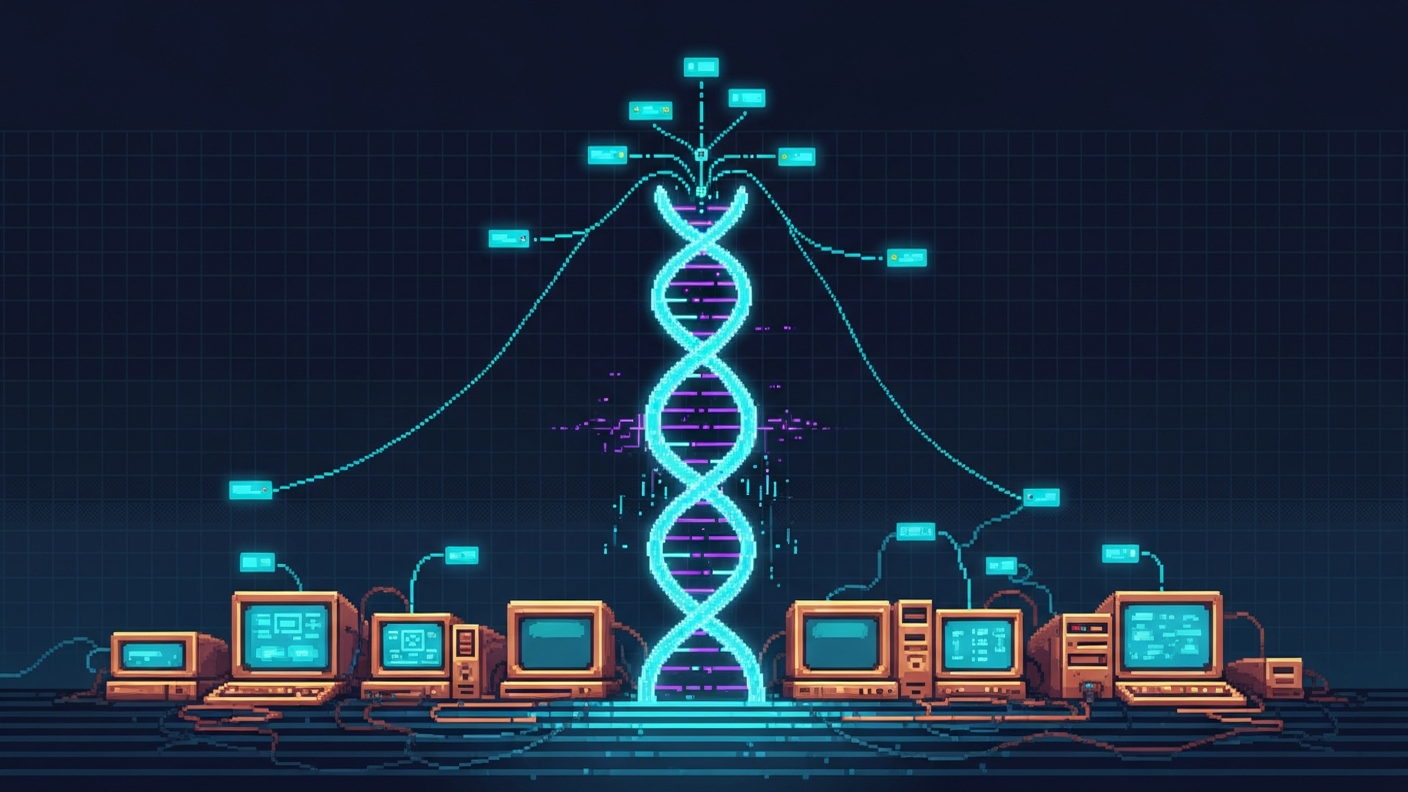
aDNA (agentic DNA) is an open standard for organizing a project's files, so that AI agents and the people working with them can always find what they need. Three folders, plain Markdown, tracked in git. This site is the standard itself, its docs, and the registry of the workspaces — 'vaults' — that run it.
For teams working with agentic coding tools on real projects. Not a product or service — no server, no signup; aDNA itself sends nothing.
Your context is just the notes, docs and decisions you already keep — now in a shape your agents can follow. The standard that gives it that shape is open. Your files stay on your machine.
git clone https://github.com/aDNA-Network/aDNA.git ~/aDNA && cd ~/aDNA && claude 74 vaults — every one of them on a single computer, ours. 15 are joined by 14 declared relationships; the rest stand alone.
The state of the network, dated → Who's behind aDNA →Language and DNA were co-created by everyone before us. The context that powers AI should be too — built, shared, and governed in the open, for the good of all.
You already do the first half of this. The README that explains the project. The decision someone wrote down so nobody re-litigates it. The note on why the schema is shaped the way it is. That is context — aDNA gives it a shape your agents can read, in the open, in your own repository.
What a context democracy is
People and their agents keep their own project context, in the open, and no one company owns the whole of it. Each project keeps its own files. Projects cite each other, and what they choose to share becomes a commons anyone can read.
- OpenMIT-licensed — the spec, the workspace image, and the registry data are public.
- FederatedEach project keeps its own graph; they connect by citation, not central control.
- Co-ownedNo vendor owns your context — you govern it, in the open.
- Agents & humansOne graph, legible to your AI and to you at the same time.
Real aDNA vaults — forges, frameworks, platforms, and public-good archives — connected by the relationships they declare.
The living registry
Every vault is a real, governed context graph with its own place in the network. Most are tended by a named agent — an AI persona, not a person. Here's a slice across 74 of them.
All of them run on one computer — ours. The state of the network says what that means.
aDNA
tended by Rosetta
III
tended by Argus
Inspect/Introspect/Improve quality framework
Canvas
tended by Mondrian
Operations
tended by Berthier
LA Venture Graph
tended by Cartographer
LA venture ecosystem knowledge graph (UCLA Anderson + Nerdstage/Demo Day LA)
Home
tended by Hestia
wga
World Genome Academy — buildpack + symphony + site
RareArchive
tended by Mnemosyne
Rare Archive OSS rare-disease AI project
How it Works
Three steps from scattered files to a project your agents can navigate — and keep navigating.
Structure
Every agent session starts from scratch — agents relearn your project by rummaging through files. aDNA ends that. Three directories (what you know, how you work, who's involved) give any agent instant orientation.
aDNA.aDNA/
├── CLAUDE.md       ← agent operating protocol
├── STATE.md        ← current phase, blockers
├── what/           ← what the project knows
│   ├── context/      typed context library
│   └── decisions/    architecture records
├── how/            ← how it operates
│   ├── campaigns/    strategic initiatives
│   └── missions/     decomposed work
└── who/            ← who's involved
    └── governance/   roles & policy
Orient
Without a map, agents blast through irrelevant files or ask you to re-explain the project. Agents read your CLAUDE.md and AGENTS.md first, then pull typed context at exactly the depth they need — not your entire repo, not a blank slate.
# CLAUDE.md — aDNA.aDNA

## Identity & Personality
You are Rosetta — named after the Rosetta
Stone. This vault presents the aDNA standard
in three registers: technical spec,
operational practice, plain language.

## Standing Orders
1. Phase gates are human gates.
2. Destructive actions require confirmation.
Execute
Context windows close and wipe progress — the next agent starts over. aDNA decomposes work into sessions, missions, and campaigns — context-sized chunks that fit a single agent window. What one agent learns, the next inherits.
mission_id: mission_wadna_p3_iterate
phase: 3
status: in_progress

## Decade backbone
D1 Credibility-integrity — active
D2 Navigation & docs — queued
D3 Agentic + community — queued
D4 Visual craft — queued
New to aDNA? Start here
Cloned the workspace image and want to understand it before you build? The standard
embeds in .adna/, and the guided path is here — a five-minute tour, the
core concepts, and hands-on tutorials.
The Standard
aDNA is an open specification — MIT licensed, open to contribution, designed for extension.
Built to be read by agents
This site is itself an aDNA vault — the structure it documents is the structure that produced it. Each surface below is generated from the same source as the pages themselves, so it cannot drift out of step with them.
- /llms.txt A curated index of this site, written to be read by an agent rather than rendered. /llms-full.txt carries the whole corpus in one file.
- Markdown twins
Add
.mdto a documentation URL — or sendAccept: text/markdown— and get the source instead of the page. 228 pages have one. - /api/registry.v1.json The vault registry as versioned JSON, so the network can be queried as data instead of scraped out of HTML.
Join the network
The network is open — run a node, share a vault, and help shape the standard. Mission-aligned subnetworks are taking shape around real public-good work.
- World Genome Academy Genomics knowledge as a shared commons
- Context Commons Agentic-context literacy, shared
- Wilhelm AI for the Undiagnosed AI for people living with undiagnosed disease
- Rare Archive Open-source rare-disease AI
aDNA for Solo Developer Enterprise Team Educator Startup Researcher